








How to process wood for cutlery: shaping birch logs into cutlery

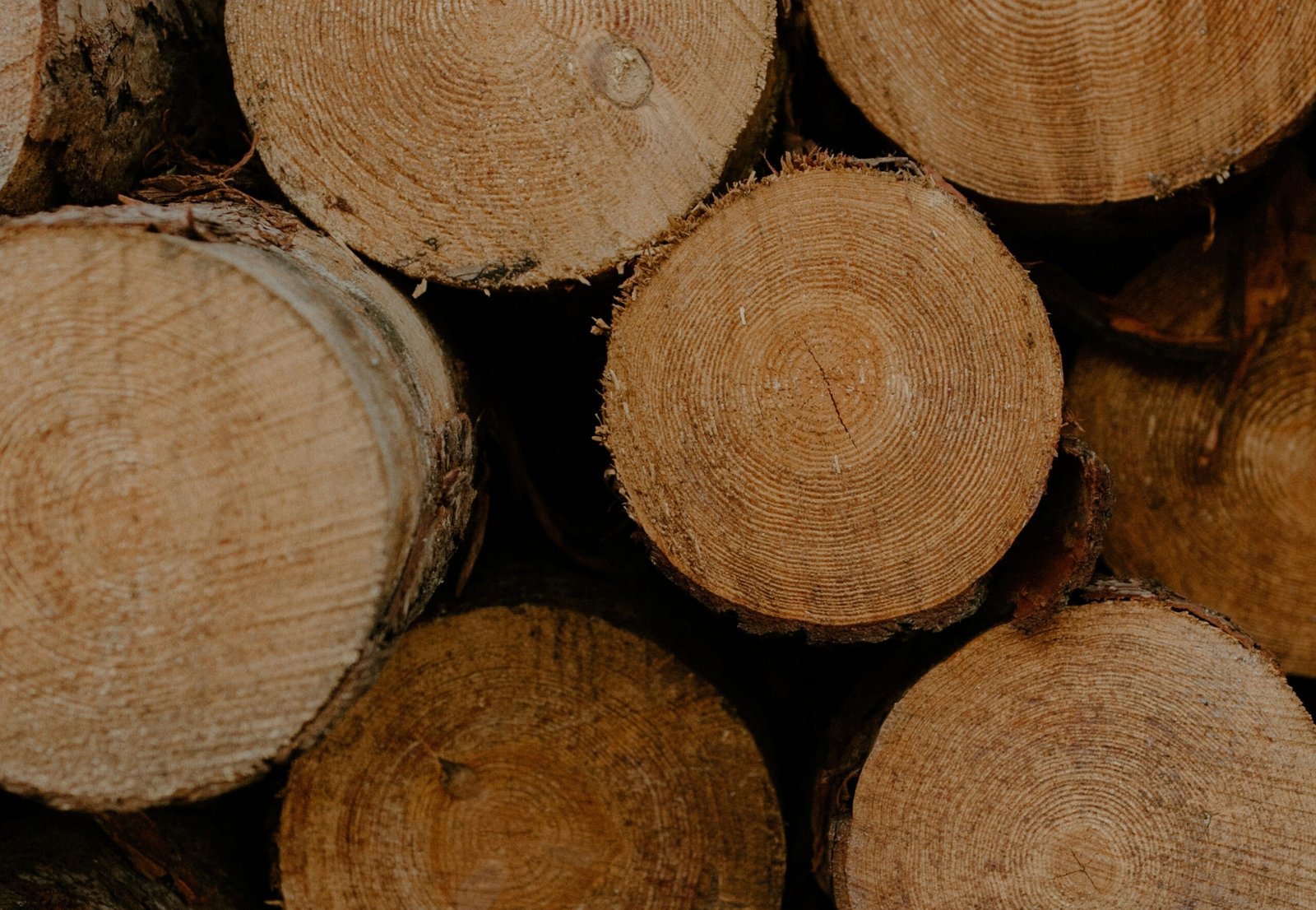
After the right birch wood has been selected, the next part of the journey begins. This is where the tree slowly starts to become the fork, spoon or knife your guest will use.
At this stage, the wood is no longer just a log from the forest. It has already been chosen for its quality, colour, shape and suitability. But good sourcing alone is not enough. The way we shape the wood will affect how the final cutlery feels, how strong it is, how smooth it becomes and how reliably it performs in food service.
For a restaurant, cafe, hotel or caterer, wooden cutlery may look simple. But before it reaches your customer, the wood must go through a careful shaping process. It must be softened, cut, peeled into thin veneer, cut into the right outline and formed into its final usable shape.
This is the stage where raw birch begins to look like cutlery.
Softening the wood
We begin the shaping process begins by placing the selected birch logs into large hot water tanks. The logs stay in the tanks for around three days.
This is not a quick boiling process. The temperature has to be carefully controlled. It rises gradually and then stays at the required level for a long period. This helps soften the wood and prepares it for peeling.
This step matters because birch is naturally strong. That strength is one of the reasons we believe it is suitable for wooden cutlery, but it also means the wood must be prepared properly before it can be shaped. If the wood is too hard or too dry at this stage, it may crack, split or peel unevenly.
Softening the wood makes the next steps more stable. It helps the material stay flexible enough to become thin veneer without breaking apart.
Cutting the logs into shorter sections
After the logs have been softened, they are removed from the hot water tanks and cut into shorter log sections.
A long log cannot go directly into the peeling process. It has to be divided into smaller sections that can fit into the production machine and be handled with better control.
This step may look simple from the outside, but it affects the efficiency of the entire process. The sections need to be cut cleanly and evenly so they can move properly into the next stage.
At this point, the wood still has its bark. It still looks like part of a tree. But it is now prepared for the stage where the usable inner wood is separated from the outer layer.
Turning birch into veneer
The clean log section is placed on a rotary peeling machine. As the log turns, a blade peels the wood into a continuous thin sheet called veneer.
Veneer is one of the most important materials in the shaping process. It is not paper, but it can look almost like a sheet of paper because it is thin and flexible. For our wooden cutlery, the veneer is around 1.7 millimetres thick.
This thickness is important. If the veneer is too thin, the cutlery may not have enough strength. If it is too thick, it may be harder to shape smoothly and consistently. The material has to be thin enough to form, but strong enough to become a reliable spoon, fork or knife.
This is one of the reasons careful material selection matters from the beginning. A good log can be peeled into cleaner, more even veneer. A poor quality log may create veneer with holes, knots, dark marks, cracks or uneven texture.
Moisture must be controlled
Once the wood has been peeled into veneer, timing becomes very important.
The veneer still contains moisture. That moisture helps the wood stay flexible enough for cutting and shaping. But if the veneer is left exposed for too long, the moisture level can change. When that happens, the wood can become unstable.
It may crack. It may splinter. It may warp. It may become harder to cut cleanly.
This is why the next steps must happen quickly and carefully. The veneer has to move through production while it still has the right moisture level. The goal is not only to cut the wood, but to protect the quality of the material while it is still in a sensitive state.
For the final customer, this detail may not be visible. But it is part of what makes the difference between cutlery that feels smooth and reliable, and cutlery that feels rough, weak or inconsistent.
Cutting the cutlery outline
After the veneer is ready, it is die cut into the shape of the cutlery.
Die cutting means using a blade that is made in the shape of the product. If the product is a spoon, the blade is shaped like a spoon. If the product is a fork or knife, the blade is shaped for that piece.
The machine presses the blade into the veneer and cuts out the flat cutlery shape.
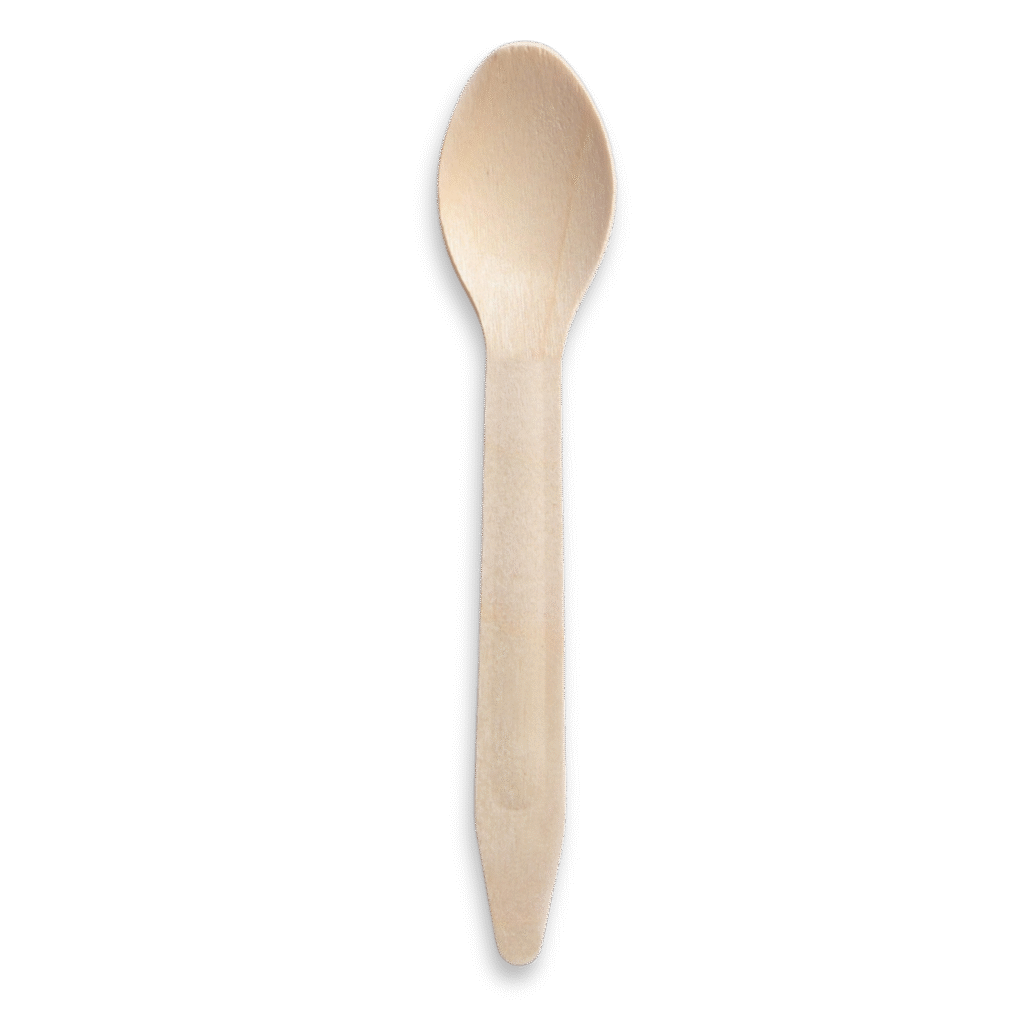
At this stage, the spoon, fork or knife has its outline. But it is still not fully finished. A spoon, for example, is still flat. It has the shape of a spoon from above, but it does not yet have the curved bowl that allows it to hold food.
This is an important part of the story. Wooden cutlery is not simply sliced from a block of wood. It is shaped step by step from carefully prepared veneer.
The quality of the veneer directly affects the cutting result.
If the veneer has a hole, the cutting machine may produce an incomplete spoon. If the veneer has bark marks, dark knots or weak areas, the cut piece may not meet the required standard. If the grain is uneven, the piece may be more likely to crack or bend later.
This is why shaping depends on everything that came before it. Responsible sourcing gives better wood. Better wood gives better veneer. Better veneer gives cleaner cutting. Cleaner cutting gives a stronger and more reliable piece of cutlery.
Mould forming
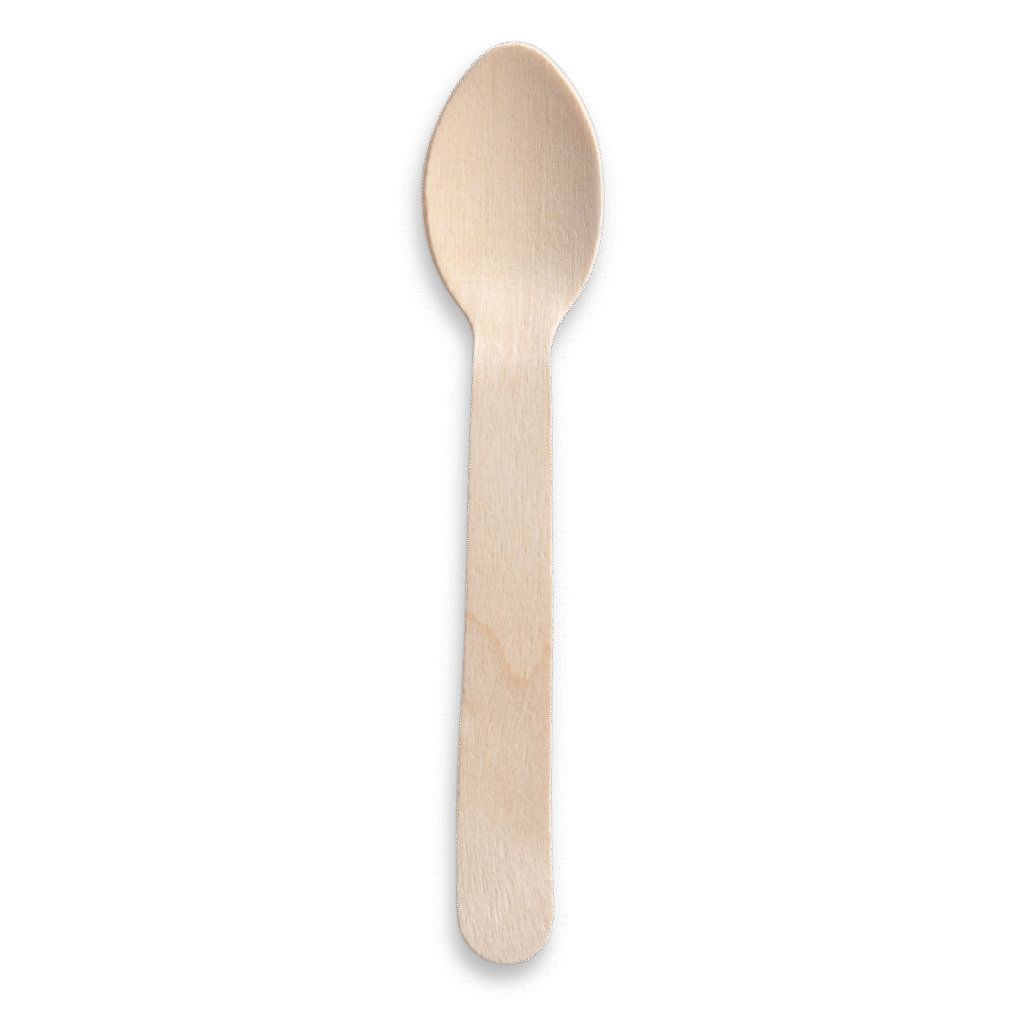
To create that shape, the flat spoon piece is placed into a heated mould. The mould presses the wood into the correct form. With heat and pressure, the flat piece becomes a real spoon shape.
This step is called heat forming or mould forming.
The same principle applies to shaping other cutlery pieces. The aim is to create the correct final form so the product is not only recognisable, but useful.
The shape must be consistent. A spoon bowl should not be too shallow or uneven. A fork should not feel weak or badly formed. A knife should not feel unstable in the hand.
Good shaping gives the cutlery its function.
The shape affects the customer experience
For a restaurant, cafe, hotel or caterer, the shape of cutlery is not just a production detail. It affects how the customer experiences the meal.
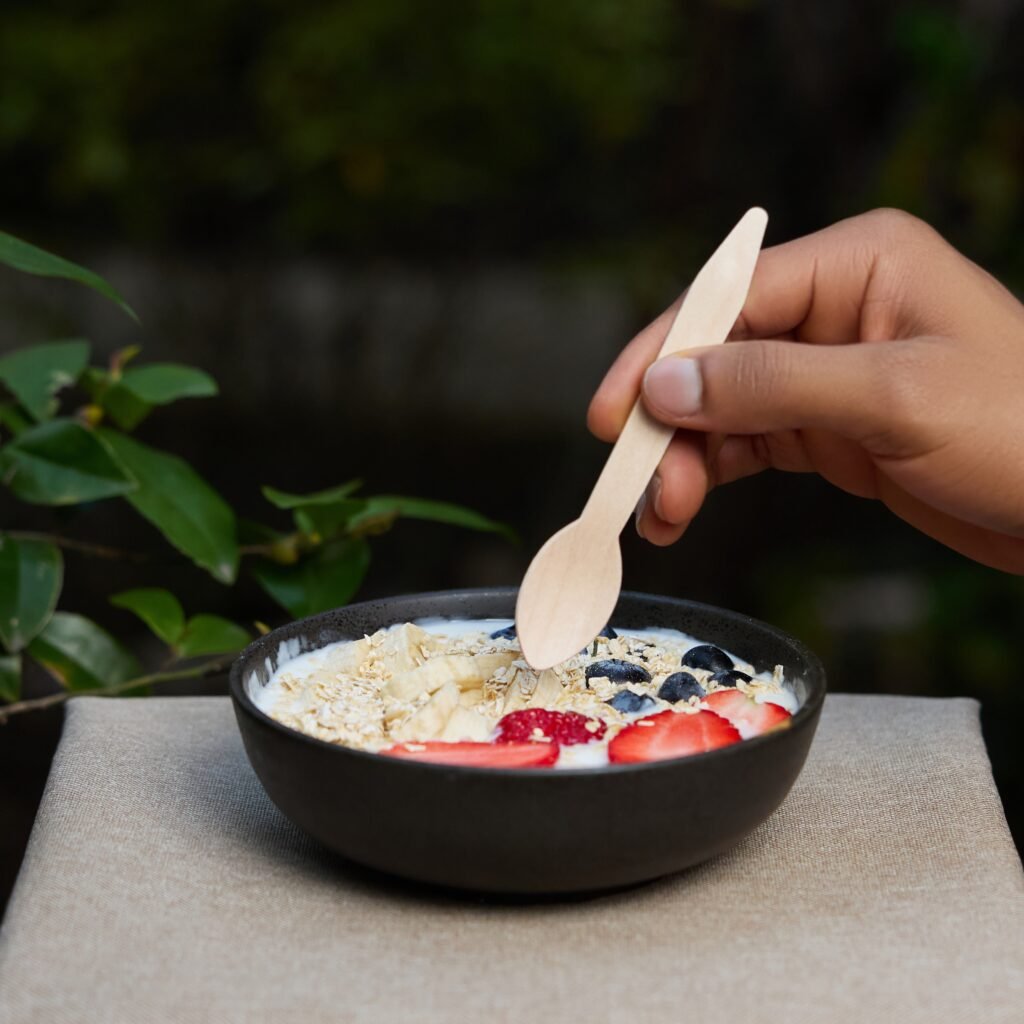
A spoon should feel comfortable when held. It should be able to carry food properly. A fork should feel firm enough for a full takeaway box. A knife should feel stable enough for normal use.
If the shaping is poor, the customer may notice immediately. The cutlery may feel rough, uneven, weak or uncomfortable. Even if the food is excellent, poor cutlery can affect the impression of the meal.
This is why shaping is treated with care. It is not only about making the wood look like cutlery. It is about making sure the final product can perform the way it should.
Good shaping helps create cutlery that feels stable, consistent and reliable. It reduces the risk of weak pieces, poor form and uncomfortable use. It also helps make the product look more professional when it reaches the table, takeaway bag or catering setup.
The journey continues
Shaping is the stage where selected birch wood begins to become cutlery. The log is softened, cut, cleaned, peeled into veneer, die cut into shape and formed into a usable piece.
But the journey is not done yet.
After shaping, the cutlery still needs to be finished. It must be dried, polished, checked and cleaned before it is ready for packing and delivery.
In the next part of this series, we will look at the finishing stage and explain how shaped wooden cutlery becomes smooth, clean and ready for food service.
€ 1,55 – € 7,74Price range: € 1,55 through € 7,74each
Select options
This product has multiple variants. The options may be chosen on the product page
€ 1,35 – € 33,76Price range: € 1,35 through € 33,76each
Select options
This product has multiple variants. The options may be chosen on the product page
€ 1,30 – € 32,45Price range: € 1,30 through € 32,45each
Select options
This product has multiple variants. The options may be chosen on the product page
€ 1,30 – € 32,45Price range: € 1,30 through € 32,45each
Select options
This product has multiple variants. The options may be chosen on the product page


